Hand Painted Zine, Part 5
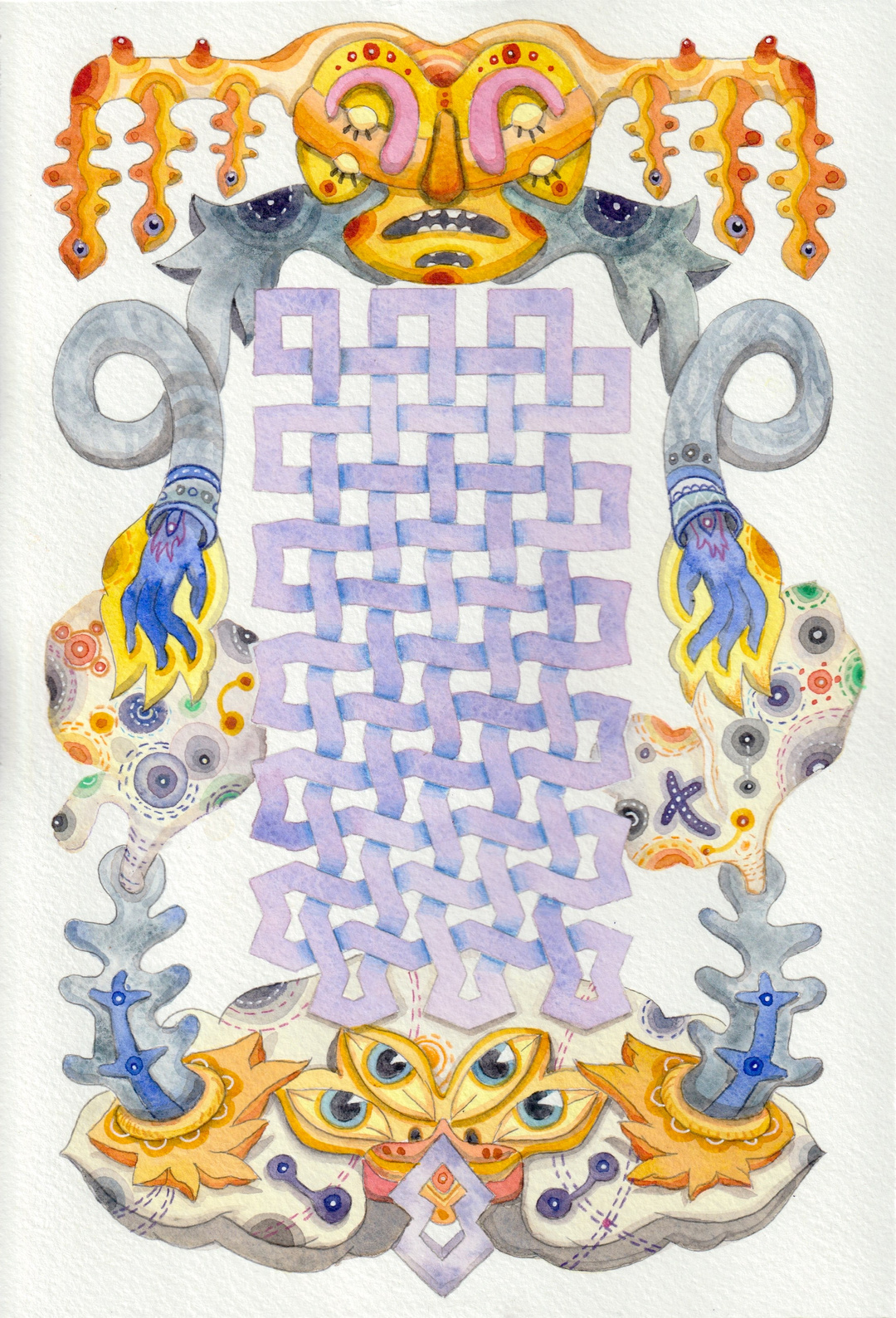
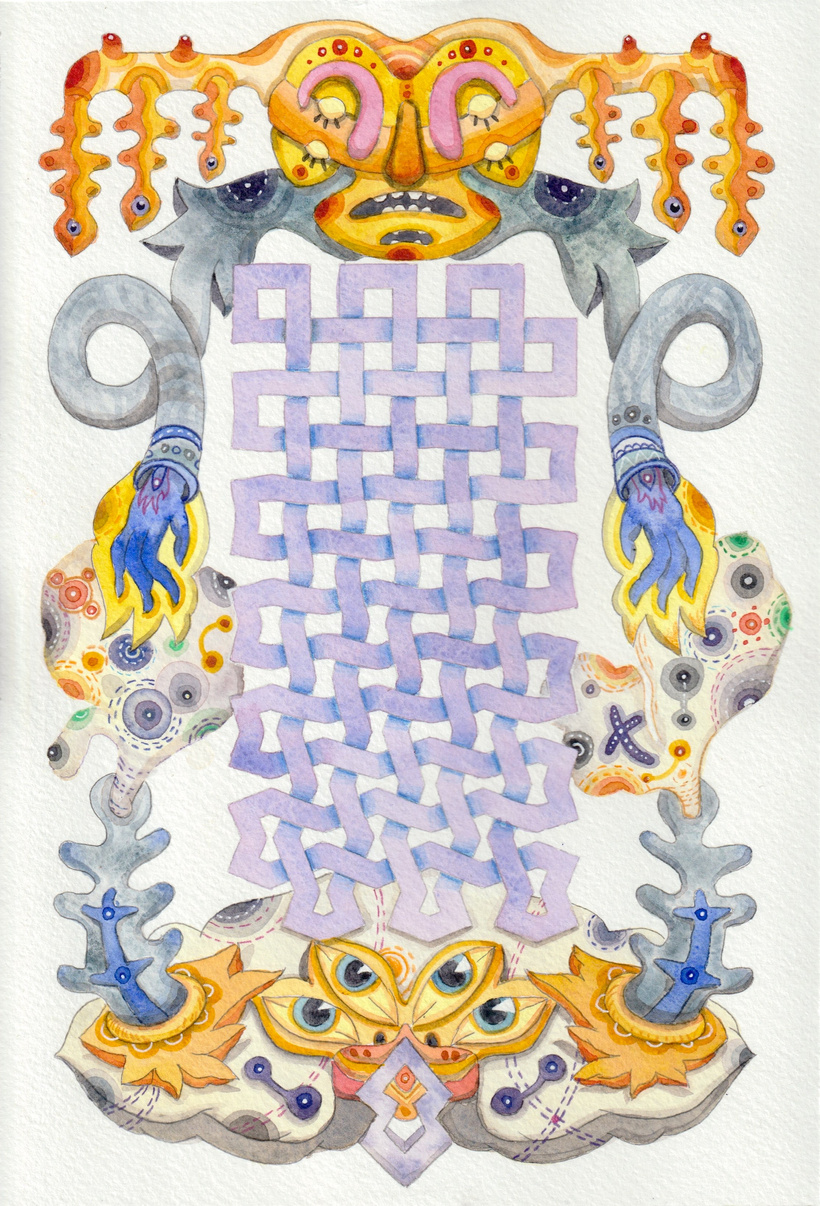
In some ways I feel like I took an easy path with this drawing. With the previous one I made an effort to do something elaborate with the "morphing pattern" by using it as a sort of skeleton. But with this one I just went for it and placed it right in the middle. The weaving effect took me a few tries to get it right but i was pleased with how it turned out at the end.
The pattern itself starts a simple arrangement of squares like this:
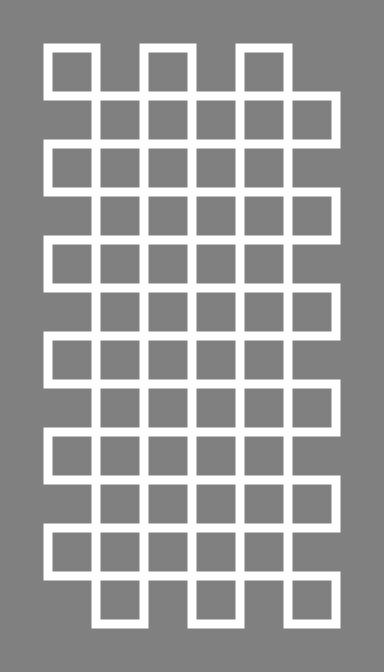
Then each square turns into a "bowtie" (or a "concave octagon" if you want to be fancy about it 💅🤓):
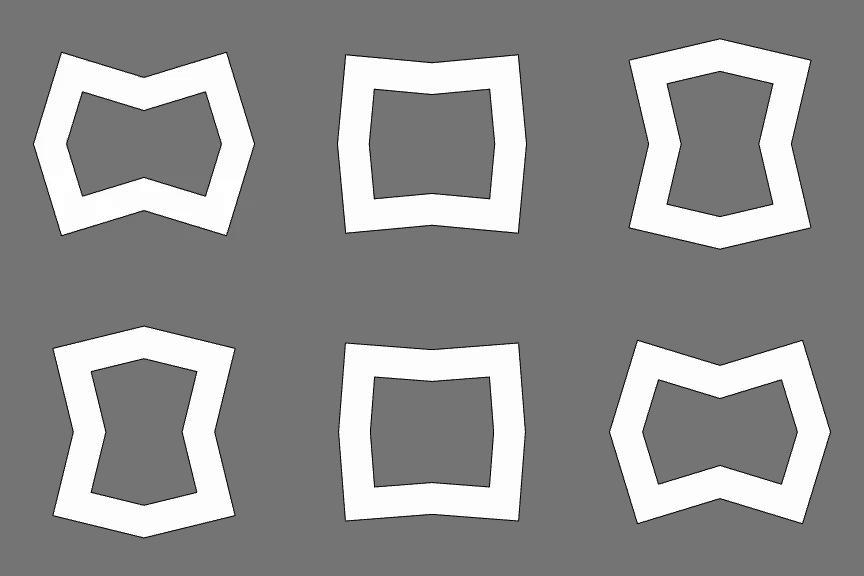
Creating a bowtie pattern like this one, notice the pleasing symmetry as the bowtie turns by 90 degrees on each row:
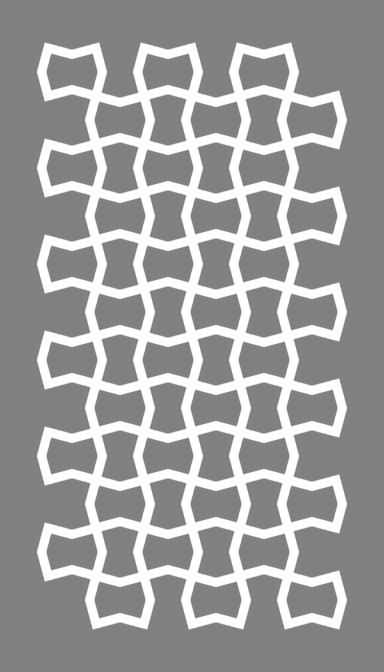
But things get more fun when you can show the progression, like a sort of animation of the transformation that takes place:
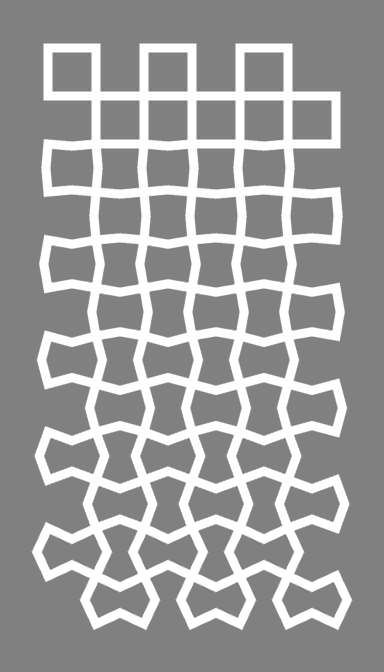
When I got to this point I thought it be extra nice to give it that weave effect by placing lines at the intersections with and over-under sequence:
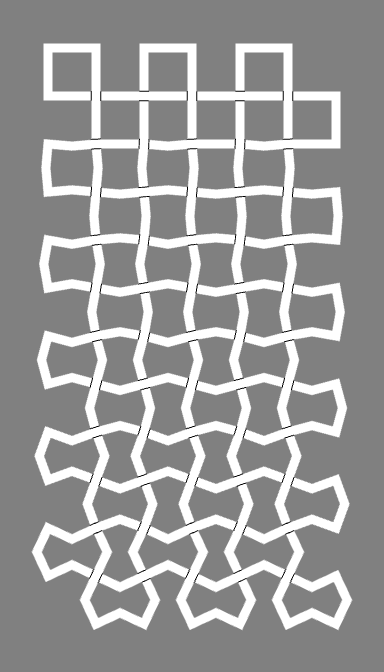
One frequent challenge with these patterns is that they look good to me as digital renderings but I need to find the way to make them interesting with watercolors. And this one in particular took a few tries on my sketchbook.
I started by varying the color of the "line" as it went around but I didn't love the way it jerks your gaze around it:
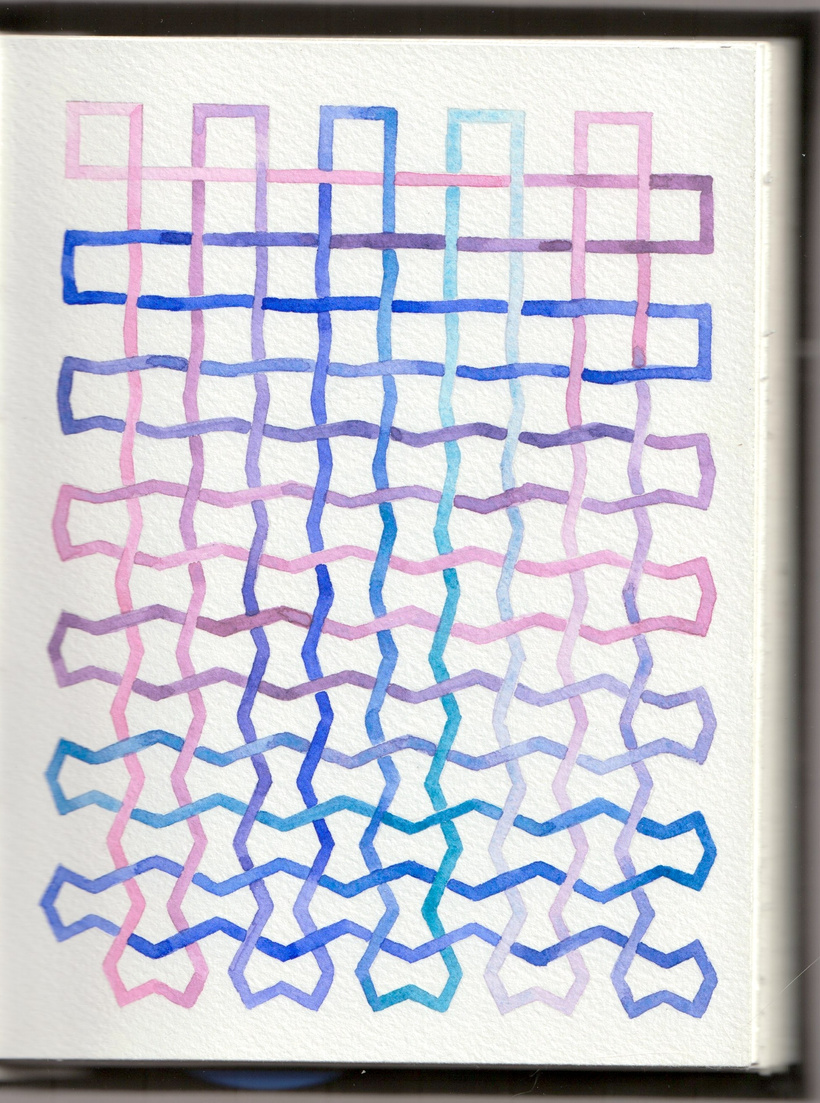
So I tried this version where there is less color variation, a thicker line, and the intersections were shaded with pencil, which made them a bit more readable, and made the thing look like an object that almost jumped out of the page:
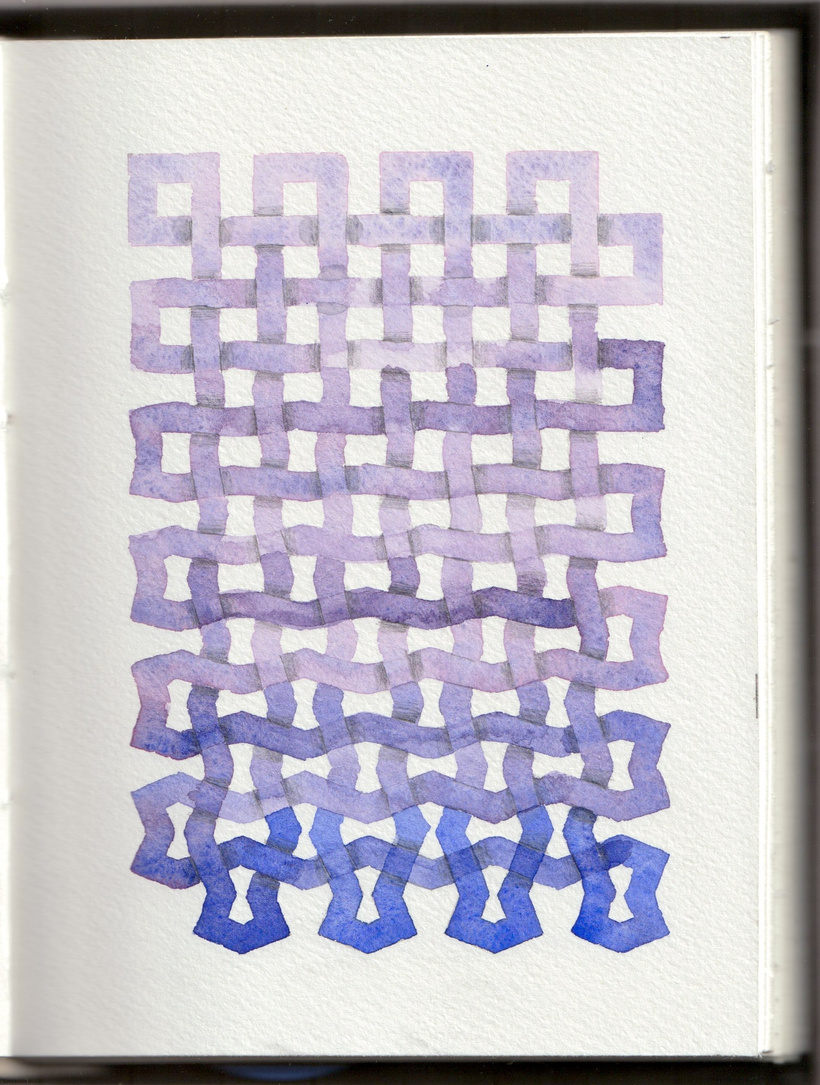
For the final version I settled on using a single color with a relatively even application. I also did the shading with a blue colored pencil before applying the watercolors to give the shading a more even look (gotta love the transparency of watercolors):
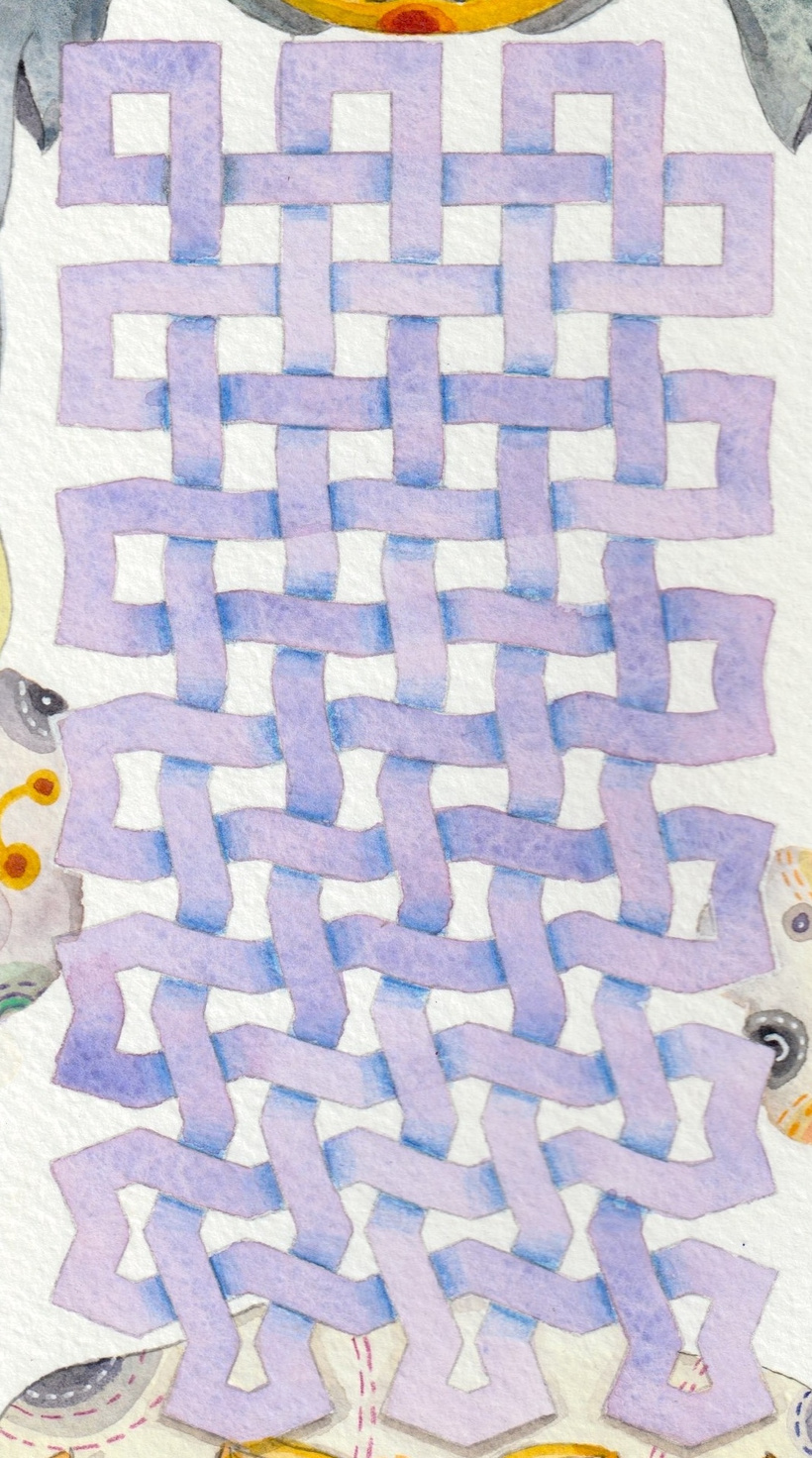
It feels a little weird to put the pattern front and center, but I do like that it's not perfectly symmetric. Of course the drawing overall is symmetric but there are enough things breaking it up to make it not-boring and to guide the gaze up and down.
A funny side quest I followed with this pattern was cutting it out of wood!
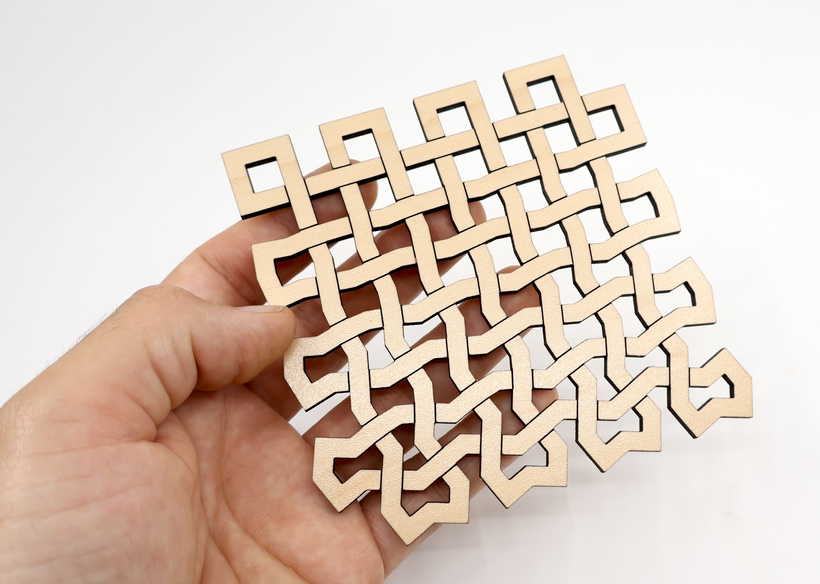
I thought it would make a fun coaster. If you want your own version for laser cutting or plotting or just for playing around it with it check it out here, you can customize the number of repetitions, line thickness, etc. The weave lines are not perfect and they break at some extreme angles but it felt good enough to share.
Question for you dear reader:
There is a fun more mathematical aspect to making these patterns and I'd be happy to go there if you are interested. Leave me comment if you want to see a video or a more in-depth tutorial about something specific. Here is an initial video I made about it. I know this kind of stuff can be a little dry so no worries if this isn't what would bring you joy.
Thanks for reading, and thanks for your support!
Federico