
Folding 3D printed mechanisms
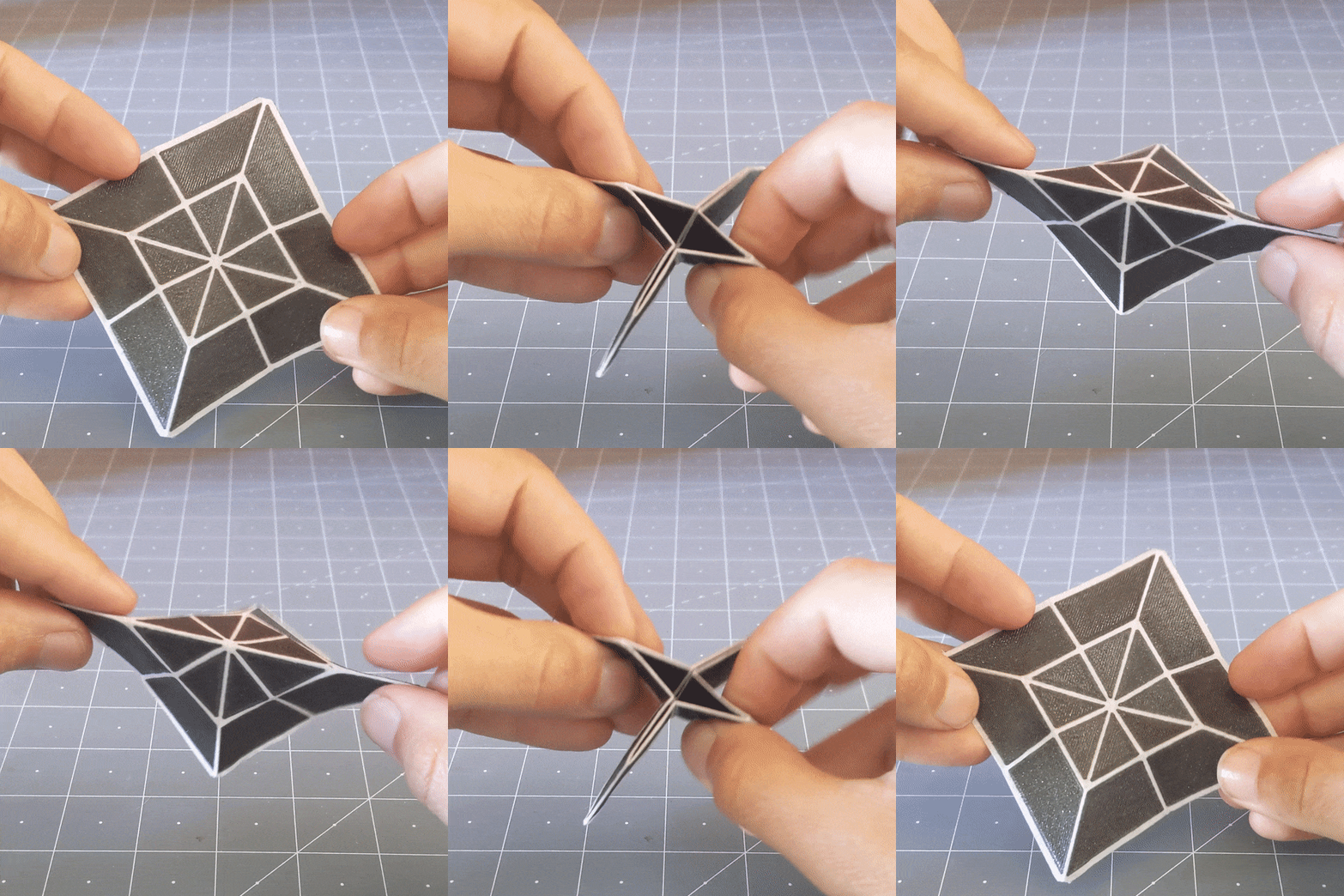
As I mentioned on my last post I wanted to try some ideas that have been fluttering in my head, and thanks to your support I have something to report. I've had some interest in the organic qualities of paper when used in mechanical movements, as in the tiny machines project, but I've also been thinking about ways to make them more durable. I also wanted to embed more structure and mechanical features into paper-like flexible materials.
One piece of inspiration was seeing Donald Bell's experiments in 3D printing small plates onto washi paper to create origami like structures. Donald generously gave me some helpful tips on getting started. He was inspired by the work of Eammon Littler who had posted an Instructable about making washi paper lanterns and even wrote a program to generate files for 3D printing these origami structures. Donald also pointed me to the books by Paul Jackson on folding techniques for designers. The work of Matthew Gardiner also points in a similar direction, he calls these things ORI*BOTS (from "Ori" meaning folding in Japanese, as in origami).
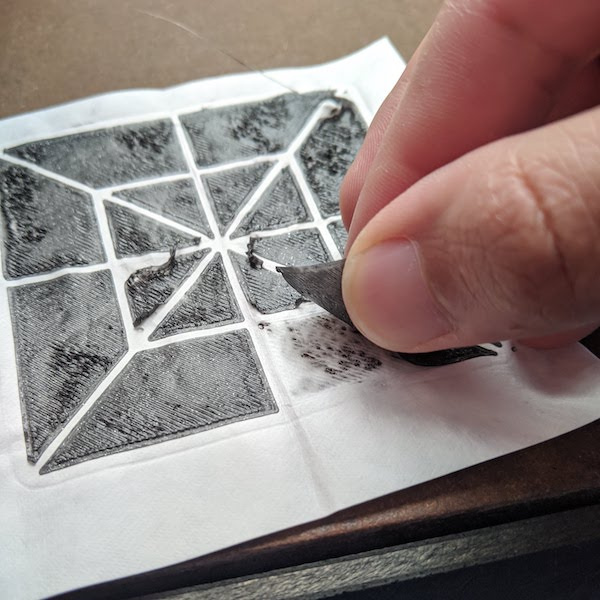
Washi paper is usually made from mulberry bark and it is coarser and tougher than regular paper. I tried some things washi paper but I wanted something in between paper and fabric so I began experimenting with fabric stabilizer which is usually 100% polyester. I settled on Pellon brand #50 heavyweight stabilizer after trying multiple materials, including Tyvek (Polyethylene) which I had high hopes for but I couldn't get things to bond to it.
Here is what happens to Tyvek:
And here is one of the first successful prints on polyester:
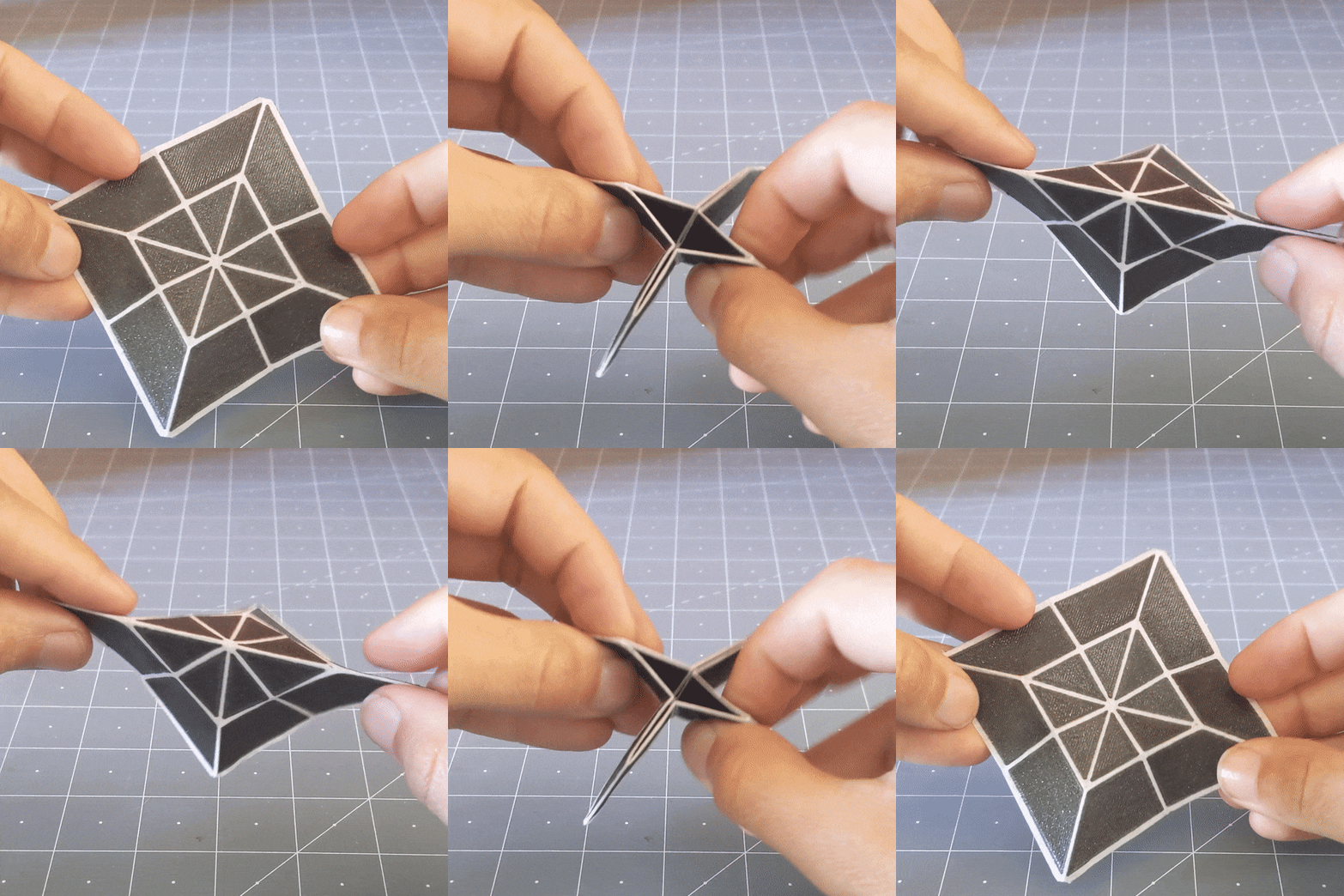
These things are really fun to play with but I wanted to take it further by adding other mechanical elements, so after playing a bit with this design I found an interesting motion and set out to add some elements to make it work as a realized little machine.
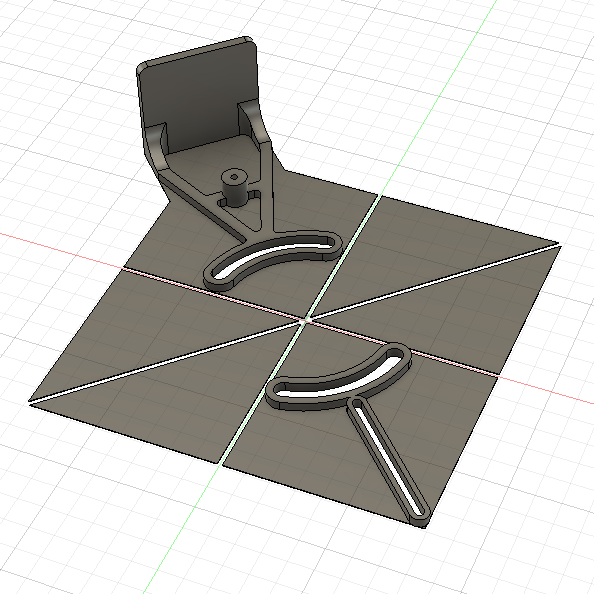
I did the modeling in Fusion 360 (software) and printed it using a Prusa Mini 3D printer using PLA (Polylactic acid, a type of biodegradable thermoplastic). The model:
And here is the finished mechanism using a piece of paper clip wire for the crank:
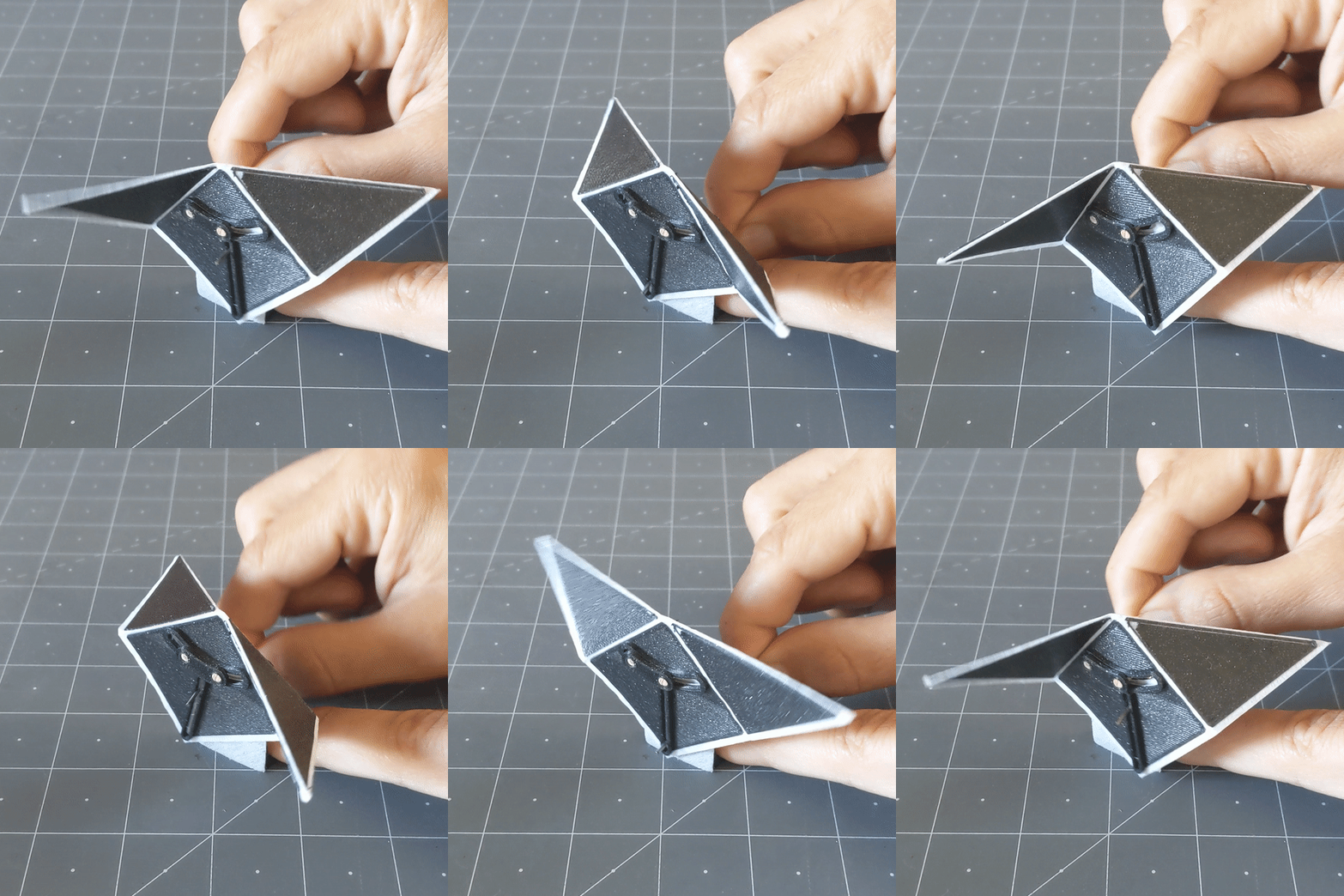
This kind of exploration seems to divert from the other illustrative work I do, but my hope is to see them collide at some point in the future. Even though it can feel like I'm lost in the weeds, I think good things happen in the long run when I manage to give curiosity some free range. And of course this freedom and ability to purchase materials and equipment for experimentation is possible thanks to your generosity. Thank you so much!
The plan in the near future is to keep on trying some ideas and more mechanisms using this technique. If there is anything you want to see do let me know, I'd be happy to give more technical details or answer any questions.
:)
If you are a bold experimenter you can find the printing files for this mechanism here:
https://www.prusaprinters.org/prints/39707-folding-mechanism-3d-printed-on-fabric